
Gospel Quartet Congregational Drive: The Essential Groove Every Gospel Guitarist Need
Feb 20, 2026If you want to sound authentic in a gospel quartet setting, you need more than the right notes. You need feel, articulation, and movement.
In this lesson I break down a foundational quartet groove that creates what I call congregational drive — that pulsing, trotting rhythm that makes people move without even realizing it.
This post distills the key ideas from the video and gives you a clear framework to practice and apply the movement immediately.
Why This Groove Matters
Gospel quartet guitar is not about flashy runs. It’s about:
Rhythmic authority
Controlled articulation
Movement that supports singers
Driving the congregation physically and emotionally
The groove demonstrated in the tutorial is a core movement that shows up constantly in traditional and contemporary gospel settings.
Step 1: Dial in the Right Tone
Before touching the fretboard, set up your sound correctly.
Pickup Position
Strat-style guitar: middle position (5-way switch center)
Les Paul: middle toggle position
Amp & Effects
Minimal reverb
Light compression (helps even out attack and add sustain)
This genre favors clarity and punch over ambient wash. Too much reverb will blur the articulation that makes the groove work.
Step 2: The Key and Scale Foundation
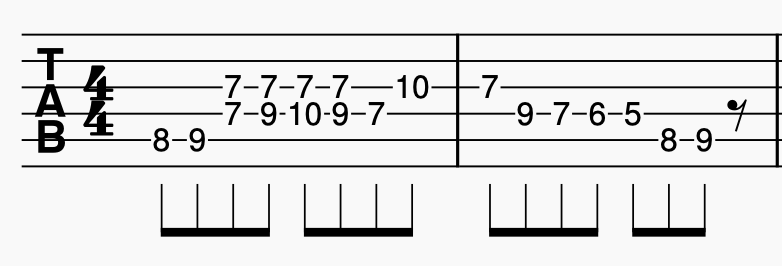
The example is taught in the key of D Major.
The movement is based on a D major pentatonic shape, but the power comes from how it’s articulated — not just the scale itself.
Important mindset shift:
Use your ears more than your eyes. Tabs won’t fully capture this movement.
This groove relies heavily on right-hand nuance and subtle phrasing.
Step 3: Fingering Discipline
My recommendation:
Use your first finger and ring finger
Avoid relying on your pinky for this movement
Why?
Most players lack the strength and tonal control in their pinky to produce the kind of attack gospel quartet requires. The ring finger provides more authority and consistency.
Step 4: The Micro Bend and Walk-Down
The movement includes:
A small, controlled micro bend
A descending walk-down on the D string
A loop back into the phrase
This is not a bluesy, exaggerated bend. It’s subtle — just enough tension to create emotional lift before resolving.
Precision matters more than intensity.
Step 5: The Most Important Element — Palm Muting
Without palm muting, the groove sounds loose and sloppy.
With proper palm muting, it develops a tight, trotting feel.
How to Do It Correctly
Use the meat of your right hand.
Lightly rest it near the bridge.
Do not fully choke the note (this is not punk rock muting).
Allow just enough sustain to create bounce.
You are aiming for a rhythmic “trot” — controlled, percussive, forward-moving.
This articulation transforms a simple pentatonic phrase into a gospel quartet engine.
Step 6: Move Your Body
Physical movement reinforces groove.
If you want the congregation to move, you must move.
Tap your toe
Nod your head
Bounce your picking hand
Slight shoulder movement
Physical motion reinforces internal timing and communicates rhythm to others on stage.
In gospel music, groove is embodied.
Step 7: Make It Movable (Apply It in Any Key)
The shape is fully movable.
Your ring finger indicates the root.
To change keys:
Move the entire shape so your ring finger lands on the new root.
Everything else follows.
Examples:
D major → E major: move up two frets
D major → A major: reposition to A on the low E string
Same pattern. Different key. Instant adaptability in live settings.
This is critical when working with singers who frequently change keys.
How to Practice This Effectively
Practice slowly with strict palm muting.
Loop the phrase continuously.
Focus on consistent attack.
Add subtle body movement.
Move it through 3–4 different keys.
Don’t rush tempo. Groove quality is more important than speed.
Where to Go Next
This is a beginner-level quartet groove — but it opens the door to:
Longer gospel progressions
Advanced quartet phrasing
Call-and-response playing
Song application in real worship settings
Watch the original video: Gospel Guitar Quartet Congregational Drive Tutorial
If you want a deeper dive into gospel quartet guitar, start with the free Gospel Guitar Video Lesson Series, or go all in with The Gospel Course.
Master this one movement with discipline and feel, and you’ll immediately sound more authentic in a gospel context.
Precision. Articulation. Movement.
